A CVS Health cordless water flosser is worth evaluating by its exact model, instructions, replacement-tip availability, and total cost—not just the words “cordless” or “water flosser.” This guide explains what to check before buying, how to approach first use, and which questions to ask when something goes wrong.
1. What is a CVS Health cordless water flosser?
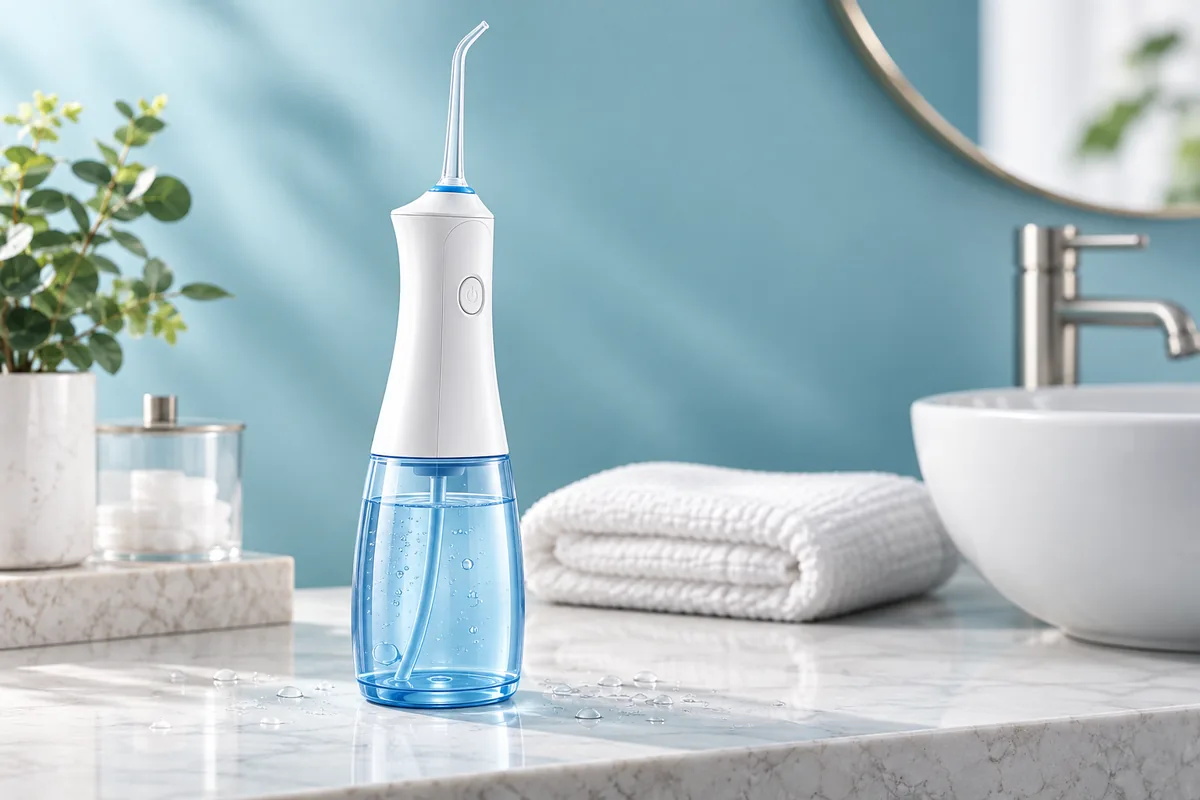
A cordless water flosser is a handheld oral irrigator that directs a stream of water through a nozzle for cleaning around teeth. In this category, the water reservoir is typically attached to the handle rather than sitting in a separate countertop base. The exact design and power system depend on the model.
If you searched for “CVS Health cordless water flosser,” first confirm that the listing is actually for the CVS Health brand. A water flosser sold at CVS can carry a different manufacturer’s name. Similar product titles, old packaging, and marketplace listings can otherwise lead you to the wrong manual or replacement parts.
Record the model number from the device or packaging. Keep the receipt and manual together. Those details are more useful for support than a generic product name.
2. Which features should you check before buying?
The most useful specifications are the ones that change your daily routine. A compact handle may be convenient, for example, but a reservoir that needs frequent refilling may matter more to you than its appearance.
| Feature | What to check | Why it matters |
|---|---|---|
| Power system | Rechargeable or replaceable batteries; approved charging equipment | Determines upkeep and travel planning |
| Pressure controls | Available settings and the recommended starting setting | Helps you follow the intended operating method |
| Water reservoir | Capacity, opening size, removal, and drying instructions | Affects refilling and cleaning |
| Included tips | Tip types and their intended uses | A standard nozzle and a specialist attachment are not interchangeable by assumption |
| Replacement tips | Exact compatible part number and availability | Avoids buying a device you cannot maintain |
| Water resistance | Explicit permitted exposure in the manual | Cordless does not automatically mean shower-safe |
| Support | Return terms, warranty coverage, and contact details | Clarifies your options if it fails |
Do not assume a specific number of pressure modes, battery runtime, reservoir size, or charging connector from a photograph. Those details can differ across versions.
3. Who might prefer a cordless oral irrigator?
Consider a handheld design if countertop space, storage, or portability is a priority. Before committing, think through filling the reservoir, holding the unit, aiming the tip, and keeping it clean. The whole routine needs to be manageable, not just switching it on.
If you wear braces, have implants, or have limited hand movement, ask a dentist or dental hygienist which cleaning method and attachments fit your situation. A device being convenient does not establish that every nozzle or pressure setting is appropriate for your dental work.
For travel, check the charging requirements, packing instructions, and how to prevent accidental activation. Empty and dry the reservoir as directed before packing. A travel case, voltage compatibility, and travel-lock function should be treated as features to verify, not assumed inclusions.
DailyVertex also covers making everyday spaces easier to use. For this purchase, a practical application is choosing an accessible storage spot where the device can dry as instructed.
4. How do you use a cordless water flosser for the first time?
Start with the manual for your exact model. It should specify preparation, approved liquid, tip installation, pressure selection, operating technique, and shutdown. The sequence below is a general planning checklist, not a substitute for those instructions.
- Inspect and prepare: check the unit, reservoir, and tip for visible damage. Complete any required charging or battery installation with the specified equipment.
- Fill as directed: use the liquid and temperature permitted by the manufacturer. Do not assume mouthwash or homemade mixtures are allowed.
- Fit the correct tip: follow the locking or seating instructions. Keep the device off while attaching or removing it.
- Choose the recommended starting setting: if adjustable, use the manual’s beginner guidance rather than immediately selecting maximum pressure.
- Position before starting: lean over a sink and follow the manual’s directions for tip placement and allowing water to drain.
- Work methodically: use the recommended path around the teeth. Do not force the nozzle into gum tissue or improvise specialist-tip techniques.
- Finish and clean: switch off before removing the tip, then empty, rinse, and dry the components as directed.
Stop if use is painful. Persistent bleeding, swelling, or other symptoms warrant dental advice rather than stronger pressure or repeated experimentation. If you recently had a dental procedure, ask your treating clinician when and how you may resume interdental cleaning.
5. How should you clean and store it?
A useful maintenance routine has two parts: the manufacturer’s after-use steps and its periodic cleaning instructions. Keeping those separate helps prevent a quick rinse from becoming the only maintenance the device ever receives.
After use, follow the directions for emptying the reservoir, rinsing approved removable parts, and allowing them to dry. Store the unit where air can circulate as instructed. Avoid leaving old liquid in a closed reservoir for convenience.
For deeper cleaning, check whether the manual permits a particular descaling method, cleaning agent, or dishwasher use. Do not apply a vinegar recipe, bleach solution, boiling water, or dishwasher cycle copied from another brand. Materials and internal components may differ.
Inspect the nozzle and seals for damage, and follow the stated replacement schedule. If no schedule is available, ask product support rather than inventing a universal replacement interval. Label personal tips if a household shares a compatible base unit; do not share the same nozzle.
6. What if it will not charge, sprays weakly, or leaks?
Check the simple, reversible causes first. Avoid opening a sealed battery compartment or bypassing electrical protections.
| Symptom | Check first | When to stop |
|---|---|---|
| Will not charge or turn on | Correct approved power equipment, intact connections, and the manual’s charging sequence | Stop using damaged, unusually hot, or swollen equipment |
| Weak or inconsistent spray | Water level, installed tip, selected setting, and the approved cleaning or priming procedure | Do not probe internal passages or increase pressure to compensate for pain |
| Water leaks | Reservoir seating, fill level, cap, and visible seal condition with the unit off | Contact support if damage or leakage near electrical components is suspected |
| Water splashes everywhere | Operating position and the manual’s tip-placement instructions | Pause and restart only after checking technique |
| Odor or residue | Drying and periodic cleaning instructions | Do not mask residue with fragrances or unapproved additives |
When contacting support, provide the model number, purchase date, exact symptom, and the steps already tried. That makes the report actionable and helps avoid advice meant for a different device.
7. Cordless vs countertop water flossers vs string floss
These options differ in handling, storage, consumables, and cleaning technique. Product format alone does not establish which is best for your mouth.
| Option | Practical considerations | Question to ask |
|---|---|---|
| Cordless water flosser | Handheld weight, reservoir refills, charging, and drying | Can I manage the whole routine comfortably? |
| Countertop water flosser | Space for a separate base, reservoir, hose, and power connection | Does my bathroom layout suit the device? |
| String floss or another interdental aid | Technique, access, dexterity, and suitability for dental work | Which method does my dental professional recommend? |
Do not treat a water flosser as a replacement for brushing or as a treatment for gum disease. Ask your dental professional how it fits into your cleaning routine, including whether you should continue string floss or use another interdental tool.
If comparing a CVS Health cordless water flosser with a Waterpik or another brand, compare exact models. Look at current instructions, compatible tips, support, and total ownership cost. We have not run a clinical or hands-on comparison and cannot rank their cleaning performance.
8. Is the CVS Health cordless water flosser worth buying?
It may be a practical purchase if the exact model meets your needs and you can maintain it. The current selling price was not verified for this article, so there is no price-based recommendation or invented discount.
Compare three costs: the purchase price, replacement tips and approved consumables, and any required power accessories. Then read the current return policy. An inexpensive device becomes less attractive if compatible tips are difficult to obtain or the filling and cleaning routine is awkward.
A simple decision rule is to buy only after you can answer these questions: Do I have the correct manual? Is the device suitable for my routine? Are replacement tips available? Are the charging and cleaning requirements clear? Do I understand the return terms?
Our practical budgeting guide explains a similar approach to purchases: account for ongoing costs before judging affordability by the initial price.
9. What should you verify before trusting a product claim?
Match every important claim to the exact model. A retailer title or a review of a similar-looking device is weaker evidence than the current model’s instructions and specifications.
- ADA Seal: verify any claim against the exact product in the American Dental Association’s accepted-products information. A brand or retailer name alone is not proof.
- Performance percentages: check the actual study, comparison method, tested product, and outcome. Do not transfer a percentage from another manufacturer to this device.
- Waterproof language: look for explicit usage and charging restrictions, not a lifestyle photograph.
- Reviews: distinguish personal experience from verified specifications, and consider whether the reviewer identifies the model.
Where to check current information
Start with CVS for the exact listing, support, and purchase terms. For general oral-care information, consult the ADA’s MouthHealthy website and your dental professional. These are suggested verification resources; their live pages were not accessible during this article’s preparation.
Prepared October 21, 2026. This guide does not report firsthand testing, a clinical evaluation, verified live specifications, or manufacturer endorsement. Its original contribution is a model-matching checklist, a maintenance decision path, and a transparent separation of general guidance from unverified product details.
10. Frequently asked questions
How do I use a CVS Health cordless water flosser?
Identify your exact model and follow its manual for filling, tip installation, pressure selection, positioning, and cleaning. The steps in this guide are a general checklist, not model-specific operating instructions.
Can I put mouthwash in my cordless water flosser?
Only use mouthwash if the instructions for your exact model explicitly permit it, including any dilution and rinsing requirements. Do not assume every liquid suitable for rinsing your mouth is suitable for the device.
Is the CVS Health cordless water flosser ADA accepted?
We did not verify an ADA Seal for a specific CVS Health model. Check the exact product against the ADA’s accepted-products information before treating a retailer or brand-level claim as confirmation.
Does a water flosser replace brushing or string floss?
It does not replace brushing. Ask your dentist or dental hygienist whether to use it alongside string floss or another interdental aid, based on your teeth, gums, and dental work.
Can I use a cordless water flosser with braces or implants?
Ask your dental professional which device, tip, pressure, and technique suit your dental work. Do not assume an included standard nozzle or a setting is appropriate for every situation.
How long does the CVS Health water flosser battery last?
Battery runtime and charging time were not verified. Check the exact model’s manual or current official listing. Cordless does not establish a particular power system or runtime.
Why is my cordless water flosser leaking?
With the unit off, check reservoir seating, cap placement, fill level, and visible seals as directed by the manual. Stop using it if parts are damaged or water may reach electrical components, and contact product support.
Where can I buy replacement tips?
Use the exact model number to ask CVS or the manufacturer for compatible replacement tips. Do not assume tips from another brand fit or seal correctly. Current stock and compatible part numbers were not verified.